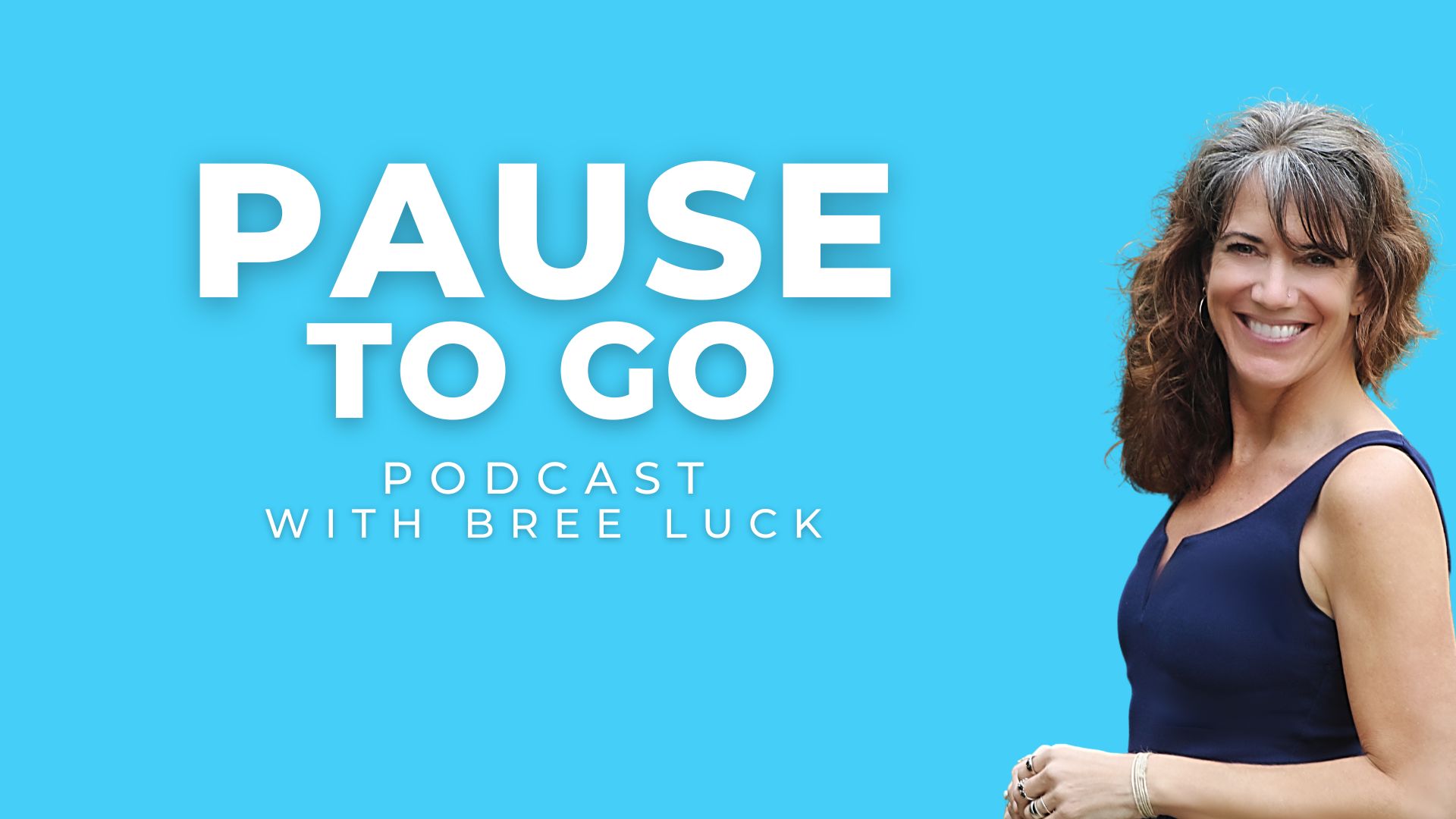
Going feral at fifty! How to reclaim the sensual self and love life


 Apple Podcasts

 Spotify

 Castro

 RSS Feed

 YouTube
In this episode, we delve into topics revolving around midlife transitions, self-discovery, sensuality, and sexuality. Bree Luck speaks with expert guest Chloe DeSousa, a sex, intimacy, and relationship coach with a focus on somatic approaches to engaging with oneself and others. Together, they navigate interesting aspects of body image, aging, trauma, and relationships. DeSousa explains her appreciation for Tantra's philosophy of connecting the body and spirit and shares tips on shedding shame around sensuality. Through personal stories, insights, and expert advice, this episode affirms the importance of taking time to foster one's individual relationship to sexuality and sensuality, in the pursuit of an enriched and empowered life journey.
00:00 Introduction and Welcoming the Guest
06:46 Exploring the Journey of Self-Discovery and Aging
15:27 Understanding Trauma and Its Impact on Connection
27:53 Embracing Aging and Sexuality
28:40 Influences and Heroes in the Field of Embodiment
31:49 Exploring Self-Love and Sensuality
Awkward Sage + Feral Grace go LIVE - Feb 21st
Q&A with Chloe, February 21st at 4pm ET/9pm GMT
Register HERE:
https://awkward-sage-media.ck.page/6ba944671f
Chloe de Sousa is ready to answer your questions about intimacy in midlife, somatic paths to healing, and tapping into the feral self. Bree Luck will read your anonymous questions online!
We will be discussing sensitive topics in this episode that may include, but are not limited to trauma, body dysmorphia, sexuality, intimacy, grief, and relationships
Want to send us a question for Chloe to answer? Here are three ways to do it:
1. Leave us an anonymous voicemail at : https://www.awkwardsagemedia.com/show/pause-to-go-podcast/ (click the tab that says 'Send a voicemail" on the right)
2. Join the private FB Group at: https://www.facebook.com/groups/231466982303099 and post a question anonymously in the group!
3. Follow Awkward Sage on IG at HTTP:// Instagram.com/awkwardsagemedia and send me a DM (not anonymous, but I won't share your name unless you want me to!)
Important Links:
Check out the fabulous Honey Pot Meditation
Free Chapter: How to Live Your Feral Self
About Chloe De Sousa:
Chloe De Sousa is not your average love, sex, and relationship coach; she's a luminary with over two decades of experience guiding individuals through intimacy and self-discovery. As a seasoned 5 rhythms dance teacher and a dance movement psychotherapist, she's not just about theory; she's all about embodiment and transformation.
With a passion for unlocking the boundless potential within each person, Chloe empowers her clients to embrace their ecstatic sexuality and step into their own unique leadership journey. Her approach is rooted in trauma-informed practices, blending the latest findings in modern science with the timeless wisdom of ancient tantra.
Known as a "legend of space holding" and hailed as the "queen" of 5 rhythms dance facilitation, Chloe's reputation precedes her. Her influence extends globally, offering 1-1 coaching, transformative courses, and captivating talks that bridge the gap between ancient wisdom and modern understanding.
Beyond her spoken words, Chloe is also a published author, sharing her profound insights with the world. In her eyes, pleasure is not a privilege but a birthright for everyone.
Want to Support the Pause to Go Podcast?
Here are four ways:
1. Leave a written review on Apple Podcasts or drop 5 stars on Spotify
2. Send me a voice memo, letting me know your thoughts about the show
3. Buy me a coffee. A little caffeine goes a long way to ignite midlife convos.
4. Follow @awkwardsagemedia on IG and FB!
00:00 - Going feral at fifty! How to reclaim the sensual self and love life
00:21 - Introduction and Welcoming the Guest
07:04 - Exploring the Journey of Self-Discovery and Aging
15:42 - Understanding Trauma and Its Impact on Connection
28:04 - Embracing Aging and Sexuality
28:51 - Influences and Heroes in the Field of Embodiment
32:01 - Exploring Self-Love and Sensuality
0:00 The gift of the perimenopause is that you start to say no. And even though people don't want to hear it, I say it's really good for your environment. All these people need to hear that there actually is some limitation to your time. There's a value on what you do, and you're going to choose who to spend what portions of your day with. Welcome to pause to go, the podcast that's all up making the most of life's transitions from middle school through menopause. I'm your host, Brie luck, joining you as we embark on a journey of self discovery and questionable decisions. Get ready for heartfelt conversations, expert insights, and personal stories that'll have you laughing, crying, and saying, thank goodness I'm not alone. If you've lost your midlife crisis survival kit, we've got you covered. So join me, won't you? And together we can pause to go welcome back to the pause to go podcast. I am delighted today to introduce you to my new friend, Chloe D'Sousa. She is a sex, intimacy and relationship coach who specializes in somatic approaches to really engaging with yourself and with others. She is wonderful. I know you're going to love her personal stories and also just her general approach to
1:33 how we can move through trauma, how we can shape new narratives around aging and relationships by engaging with our bodies. The name of Chloe's company is feral grace, and I just love that because it really feels like feral grace being really in your body, feeling it completely. And also the beauty of that, the elegance of that. I'm excited for you to hear that in Chloe, to see it if you're watching, and to take that with you and hold on to it as you move along in your aging journey, if you want to take it even deeper, if you want to get even more intimate. And that's what we're really about here. At pause to go is getting into those intimate, real, deeply human conversations. Chloe has agreed to do a live q a with me in the week that follows the release of this episode. We will share the exact date on Instagram and Facebook, and I'll add it to the show notes as soon as we have it as well. So you can look for the date there. And what we are going to do is take your anonymous questions.
2:57 So if you have a question after listening to this episode, if it has inspired something in you, a question that you have about your own sense of aging, or how to engage with your body, or how pleasure is your birthright and how you can access it, send us a question. Send us your thoughts. We want to talk about it. I want to remind you both in. This episode and in the live Q A that a podcast episode and a public Q A are no replacement for medical care or psychological care. We are not offering medical care or psychological care in here. We encourage you to seek professional help when and if you need it. And I know I go to therapy. I know Chloe does her own work. We encourage you to take care of yourselves in that way. But here we are creating a forum for having those discussions.
4:04 So how to leave us your questions? You can leave us a voicemail on the postigo podcast web page. It used to ask for an email, but I believe I've got the settings now where it doesn't ask for an email anymore. So you can truly be anonymous. Another way to leave us anonymous message is by joining the postigo podcast Facebook group. That's not anonymous, right? The Facebook group is not anonymous, but within the group you can leave an anonymous message. You can leave an anonymous post. So go there, leave us a post, let us know what your question is, and we'd love to address it on the live Q A.
4:52 But first, enjoy this episode with Chloe of feral Grace. Chloe, I'm so happy to have you here. I had such a great time just planning this conversation with you. I've been looking forward to it all week. I'm so happy to be here. Equally. I kept looking in my diary and occasionally awkward Sage would catch my eye and I get this little heart flutter. It's always a good sign. It is. They say that if you have something to plan, a way to sort of check and see if it's the right thing for you, is to imagine that you have to do it tomorrow. So if you're committing to something, you think, how would I feel if I were doing this thing tomorrow? And if your first thought is, I try to find a way to get out of it, you don't do it. I love that. And if your thought is, oh, I'm excited about that, then you know that it's in alignment and that you're ready for that. So I was ready to meet with you. That takes us really lovely into letting the body lead. Like, my background is an ecstatic dancer and dance movement psychotherapist. And what we really want is the heart and the body and the mind to be in one place in alignment. So kind of what you're describing is this, like, all of you wants to be there because sometimes our mind somewhere, or our heart somewhere else, our bodies are tired and that little alignment, like, oh, yeah, all of me wants to be there.
6:23 It's a good sign. Today we're going to talk about how to get in that alignment, how to find that alignment. Yes. And maybe also to recognize how we're out of alignment so that we can reach alignment. Yeah. And I think that's the thing. Like, these days, with the amount of study that I've done and the personal processes on myself, when I find the out of alignment place now I know there's gold there. Now I almost want to go there because it's like, oh, great, I found another piece of myself that takes me into a more expanded version of myself or a little bit more internal freedom, and that's now a go to place.
7:03 Beautiful. So I'd love to begin with a question that I ask every guest who comes on to pause to go, which is, how old are you and where are you in your midlife journey? Oh, fantastic. So I turned 50 last month, which was fantastic. And it was funny, the journey around it. So somebody asked me on a car journey, I think, like, oh, how do you feel about turning 50? And I think I feel genuinely excited. So, first of all, the cultural conditioning of what it meant to be 50 came up for me, like, on the way there this year. And then it was like, I see so many women redefining what 50 means. Like, literally, there's people breaking limits in the Olympics and they're going out and learning all these things. So this year I learned to ski and I learned to surf. And so this is how I mean, to carry on. That's amazing.
8:05 And how has that been for you, physically, to learn to ski and learn to surf at age 50? Yeah. So I think the skiing was probably the hardest one as a dancer, I have good balance. I have good body coordination. What I do notice, because I'm also a runner, is that I get injuries more often. But with that comes also more deeper body listening. So I got off lucky. But I think what also occurred through learning something new was a choose a really skilled practitioner to teach you whatever it is you're learning. Because I'm fussier these days about everything, in fact. And secondly, it brought me back into what I'm asking other people to do. I've spent over 20 years studying embodiment and body movement, body processes, emotions in the body, and I'll be inviting my clients to, oh, we're just going to drop into the body now. I do that in a very trauma informed way, but somebody saying, well, we're just going to ski down the ski slope. And I was like, that's really scary, right? So I was reminded, like, oh, when this isn't your home place, you're asking somebody to do. And I thought, that's a very sweet reminder of the beginner's mind. I love that. Where are you in terms of perimenopause and menopause? Oh, we're going there. So I am getting to the point where certainly I noticed a few years ago that I needed to start to study the perimenopause. So I
9:38 noticed, first of all, my energy levels dipped. And then it was like, the very solid ground inside of myself that I was used to standing on started to shake. And with that shaking, I decided to self educate a bit, because it was like I was trying to point out to my family at the time, I'm managing this really well. Like, if you knew what was happening inside of me, like, my delivery to you guys, it's pretty hot. But it was like everything I was standing on was shaking. And I started to realize the opportunity to let the shake shed the things I didn't want, whether that was ideologies, the way I self cared, the way I was choosing to live my relationships. There's the handy oestrogen drop that stops you over caring for your environment, and it starts to be my turn.
10:27 So my business actually flourished even more because I was like, I'm really excited about this. I'm going to take some time out this afternoon while you have the really. I would say I'm perimenopausal, but I'm cusping now. And I think I really wanted to mention the red school, Alexandra Pope's work. So there's wise power, which really brings in the physical and the spiritual journey that we go on. So wise power is this perimenopause and menopausal process is when we really step into our authority, our identity really hones itself down. So if you imagine that each cycle, when you get the critic just before your period, that's a preparation ground throughout the whole of your life for the actual whole menopause, wherein this perimenopause, which is the quickening, faces you with the biggest critic. What do I want to let go of in this perimenopause phase? And it starts to quicken, like the desperation, but there's an urgency to it. So in terms of late in 45, there were some things that I thought, oh, I'm never going to have that happen. My bucket list, what's on it? And then the perimenopause came in, it was like, I'm going to make that happen.
11:45 And then you started skiing, and then you started. You got me. Yeah, exactly. And there's lots of personal crisis. So I do find the client group often coming towards me. I'll work with people of all ages, but often you've got women saying, how do I not chuck the baby out with the bathwater? I want to walk away from? My whole life is a part of that perimenopausal process. And alongside that, what was happening to me in my perimenopause, because I've always been very connected sexually my whole life, I've had damage in other areas, but that remained intact, that my sexual energy was really rising. Now, physiologically, I could probably get told by somebody, that's because it's like, last chance to get a baby in before the whole thing changes. But also it was an ownership of the fact that I'm very connected sexually, and therefore, what am I going to do with it? How am I going to take responsibility for educating myself with what I want to do with it and offering space to people who might not be as lucky as me? We all know there's an orgasm gap, and I'm here maybe to close that.
12:52 I'm here to educate women around body ownership, consent, the fact that we all have a capacity to be multiorgasmic, to experience a wide range of sexual repertoire. And it started to become clear to me that I needed to step into a leadership role around that. Hence feral grace being born, really. And alongside of that, I had a lot of learning to do in other areas in my life. But really, the sexual energy rising was a big part of the perimenopause for me. That was a gift amongst all the other shake up that happens. I love that you've mentioned a few things that are recurring themes in my community. Number one is getting quite fussy. Getting a little fussy.
13:35 You were speaking specifically about from whom you would seek instruction. But also it sounded like maybe that's just in general, too, that there's a little more of, like, I want this to be right. Am I reading that correctly? Yes, you are. Absolutely. Yeah. And then that, coupled with moving into think it's a biological movement, this is my feeling about this. I'm just being really clear about that. But there's a movement that's not always reflected in the culture, which I think is how we have some of the cognitive dissonance that we have in this age, because biologically we are moving towards a place of. It's time to receive. I've given and given. I've given my body, I've given over to other people, and it's time to receive. And the culture is. Wait, what?
14:26 Wait, what? You want something now? What? But you're just a woman. Yeah, very much so. Nagowski's just written a brilliant workbook called Burnout, and I think it's page ten in there, but I could look it up for you if you want. And she talks about the role of women giving, but also why that causes burnout among women. I was reading statistics this morning, actually, on the autoimmune diseases that women suffer as well. And it's this over giving, and the over giving is acceptable in our society. And the very gift, and I really coach people around this, the gift of the perimenopause, is that you start to say no. And even though people don't want to hear it, I say it's really good for your environment.
15:09 All these people need to hear that there actually is some limitation to your time. There's a value on what you do, and you're going to choose who to spend, what portions of your day with. And often that's with yourself. Like, I choose to spend much more time with myself. Yes. I think of myself as an ambivert. I probably truly am more extroverted, but it just happens that the person I want to spend the most time with is myself. I'm an extrovert who wants to spend more time with myself. Yes. Ready? Relate. Really relate. You mentioned damage, and that makes me think about what I've seen that you write and speak about, which is the impact of trauma on our ability to connect in a multitude of ways. Can you talk a little more about what you mean by trauma and connection and your feelings about that? Yeah, absolutely. I think we are so sensitive as human beings, first of all, and this is a gift as well as a slight curse. So I've worked very early on in my career in adult psychiatry, so I've seen very much where people are very, very damaged. With the majority of people, we're carrying childhood experiences, and they flavor the way we relate in our adult life. So a classic example of this would be your attachment patterns, whether you're secure, anxious or avoidant, attached. And let's be clear, most people are a mix of all three, but you're
16:42 likely to be majority one. And good news, you can change your attachment patterns. You can change it because maybe you're with someone who helps you get into a more secure place. But also the work that I do specifically and many others out there, please choose. A good practitioner is to start to integrate some of the trauma that's stored in your nervous system so that you start to behave differently in your relationships and in your environment. So one of the lenses I'm very much in favor of I work with changing your inner ecology and that will change your outer ecology. And one of the things that motivated me was also the statistics around women's experiences sexually. So in terms of body ownership, there's the reintegration of traumatic relationships or traumatic, to whatever degree, sexual experiences, so that you start to have ownership again.
17:41 So I'm a PTSD survivor, so I've mapped my way out of the black holes that you can fall down as a PTSD experiencer. And so once you've reintegrated a fair bit of trauma, what you want is to I really in favor of people owning back themselves so they can have that freedom back to have a relationship without expecting a certain level of whatever came their way in their previous relationships, taking a stand for boundaries, enjoying your body again because it's yours no matter what happened to you. And that also can be quite a lot of fun once you've got in there. It's not the same as psychotherapy, which it's a bit faster than that actually, most of the time. Why is it faster? I'm curious about that. I'm going to go geeky on you then. I love it. There's a plastics to the brain, so the neural pathways that are set are changeable. And not only that, you can grow more neural pathways. So let's imagine that you're very used to being in a relationship where you feel overwhelmed because of your avoidant attachment. And once you realize that, oh, in my childhood I felt really overwhelmed, there was always somebody coming at me, but it's not happening now. You start to grow an awareness and create a new neural Pathway that says, I'm safe in this relationship, I can ask for what I need. I'm allowed to take space and then the thoughts and the feelings to go down that neural pathway instead of the same one as your childhood, and it's the same with psychotherapy, is a really, really important place. I'm
19:14 a dance movement psychotherapist also. So you want to work out and track what your story is, but hopefully you want to get to a place where you start to write your own narrative that's really exciting because you get to be the heroine. So yes, all of these things happen to me, but if you stay on that neural pathway compounding your story, talking about it forever. You never get to write yourself the ending that you would like. I was maybe the victim of all these circumstances, and then I pulled through, and then I did some healing on myself, and then I started to attract the person of my dreams, and I now am this happy person with X-Y-Z with what I actually desired. So in dropping into the nervous system and reintegrating some of the experiences there, you free yourself up and you get to be your own heroine. I'm also thinking about what you said earlier in the conversation, which was that when you hit up against something that feels uncomfortable because we don't always just have a happy ending. Right.
20:17 We hit points of discomfort that you now look at them as opportunities that it's like, oh, here's a part to dig into and to heal a little more, explore a little more, to find out more about myself. And that seems like an even better happy ending because it's an expansive one. It's one that continues to unfold from a place of empowerment. It's not an ending so much as an unfolding. Yeah. No, absolutely. So, for example, if you have an area that seems very scary to you, sometimes moving towards it is a good thing, sometimes moving away.
20:58 So when I first started my business, I thought that somehow it was going to take me really far away from my kids. Now, of course, then I'm not going to be invested in my business, because actually, my children come first. But actually, that's not my story. That was something that was more in my childhood than now. So when I used to feel that reaction of, like, the world's going to end if I expand into this part or I do this next, or if I make a decision for myself, there's going to be a loss. And then I started to notice when I dared to take that step with the help of some good friends, that actually the world didn't end in my little corner of the universe, that actually the kids were fine and so was I, I just took a break. So there's these little moments now where I challenge myself. And it can be also an overreaction. If you've got in the tantra pantheon, there's no good or bad feeling. So it's like, oh, my gosh, I'm feeling really overly jealous or overly angry, overly sad. You know, there's probably a bit of trauma, reintegration, or nervous system integration to go on. What's the story? I'm telling myself, why is this part being really overprotective when actually what's really going on is my friend talked to another friend, or there was a small loss, but it's reminding me of a bigger loss. And I need to just uncouple those events so that I can be more in the now.
22:23 So there's a self support of my own happiness going on as that unfolding takes place. Did that make sense? So much sense. You mentioned Tantra, and I know that that's a part of your work, but in my experience, living in a very puritanical America, tantra just sort of elicits titters. People giggle when Tantra comes up. And so I think we don't really know what it is. Can you explain what tantra is and what tantric means? What it is? What is it? First of all, I want to talk about the fact that as a five rhythms facilitator, teacher, there was a lot of dancers at times that would be into tantra. And personally, I found the tantra communities near me to be the kind of people that wanted to hug me for too long and eye gaze and all this stuff. And I was like, man, I just need my boundaries. Like, will you just stop doing that uncomfortable stuff to me?
23:31 And I still hold that view. I have to say, I'm like the reformed, what is the ex smoker or whatever. I'm like, oh my God, too much. So maybe when I'm talking about tantra, I'm talking a much more like spiritual philosophy of not dividing body from spirit. So allowing the body to have spiritual experiences or allowing yourself to include your body in your spiritual experiences. So I don't want to leave my body. I would like to be here. It feels like a gift. Instead of trying to go out of my body to maybe spirit. And I'm really accepting of all religions and people's choices around them. But instead of trying to leave my body, I want to go down and in. So a lot of the problems I faced in my life, I wanted to not outsource my leadership. I wanted to find out the answers from within myself. So for me, on some level, the fact that a tantric lens said that anger is just an energy, jealousy is just an energy. And to actually deeply go into a state where I could properly experience that, because I'm all about field work, it was helpful to me. But I think there's so many dodgy tantra schools out there, I wouldn't want to suggest that anybody go and find it for have a particular experience. I'm much more about teaching people about consent with their own bodies first, teaching them about simple experiences.
24:56 They can have at home in order to get more in touch with themselves, learning about relationships and how to negotiate them. I think the more spiritual aspects of that in terms of acceptance of all emotions, has been very helpful. And certainly I can play with my own kundalini rising, which, because I have a lot of sexual energy, I can play with that I can manifest through that. I can put all that libido into my creativity or my joy or my love. That's playful. But, yeah, I still don't want to eye gaze with strangers. You really do touch on something important, which is the difference between a philosophy and a culture.
25:36 Culture often gets wrapped up in dogma or in habits or in manifestations of the philosophy that maybe don't resonate with everyone. But like you said before, you don't have to throw the baby out with the bathwater. You can still enjoy or get interested in or explore the philosophy of tantra, of really connecting the body and spirit and being PRESENt with both in this moment without Having to join a cult. Yeah. Good. You're clearly a clever woman to make that distinction. Yeah. And really take what's helpful from anything in the world and leave the rest. I want our bodies to be our homes, and I want our hearts to be able to love ourselves and negotiate the relationships we want to have. And just the fact my stepmother died many years ago, and I watched my father live even more, which was a brave choice, because she couldn't be there. He wanted to enjoy what was on offer even more because she would have wanted to be there having that experience. And somehow tantra is a little bit in there for me, or the philosophy of embodiment, because it's like I get to breathe air, I get to taste food, I get to kiss my lover, I get to talk with you.
27:01 You're thousands of miles away, and there's something about just the gratitude of being alive and wanting to live really fully and be here that marked me from. That experience and that you feel that. And that your father. I think of your father SPECificALlY FeeLing that EVEN as he. Is he still alive? Is he still with us? Yeah. He's said that he has embraced this as things may be physically more challenging, even as he may. I don't know. I don't know what his situation is, but I know that with aging can come a host of physical maladies. Certainly this is what we hear from the culture, right? That, oh, you're getting older. Something hurts. You wake up every day, something hurts. If nothing else, it can change our mindset so that we feel like we are incapable of doing some of the things that we might have done when we were younger.
27:56 So for your father to embrace that is really inspirational to hear about. I love to hear of older people who are really seizing life in a new way. I think I mentioned to you before that I have a friend who is older. She's in her eighty? S, and she's taken a new lover just recently, and she's my idol. Yeah. And I positively seek those idols out. I wrote an Instagram this week on myth busting around the topic of sexuality. And one of the myths that I wanted to bust in there was like that old people don't have sex.
28:37 You can choose not to have sex. That's absolutely, like, your choice. And definitely the older you get, make all the choices you want. But there was a joke that they might not use their knees so much. But apart from that, I love it. Speaking of different philosophies and ways into working with the body, tantra is one. Five rhythms is another. Do you have any heroes in the field or any people you really admire whose work has influenced the way that you work with people? Yeah, absolutely. In fact, I wrote about this in my how to live a feral life chapter, which was recently published. But my hero certainly is Bessel van der Kolk.
29:25 A very moving story of the way his life progressed. But he basically really brought embodiment in as a thing. So his book is called the body keeps the score, and I could reread that book 1000 times. So, Bessel van der Kolk, really, the quote that moves me most is trauma is not stored in the event. It's stored in the body. So the understanding of embodiment, therefore, is that when we drop into the body, you might find whatever happened in that moment is still somehow in your body. So embodiment helps you defrost that, which is why I spent so long on dance floors. I was defrosting a lot of what was stored in my body. Gabrielle Roth, my friend and teacher, said to me, chloe, how long will your hands cry? I said, I don't know. Yeah, just taking that in for a moment. My hands had a lot of crying to do. And then luckily, I danced long enough that my hands no longer cry. So whatever event was installed in those hands, through embodying it, I've released it. And they have now so much to. Say in analogous form, moving from dance therapy to drama therapy, which is my background. The creator of psychodrama was a man named J. L. Moreno, and he had a very similar quote, but it's slightly
30:57 different. And that was the body remembers what the mind forgets, which is lovely. And what I have also found in exploring that side of it, once we've moved through some of the trauma, is that the body also remembers joy. Yeah. It's not just the pain and sorrow. It's also that feeling of excitement, of childlike curiosity that wells up in your chest and shoulders and hands, too. Right. Like, where do you feel that in your body? And so bringing those two together is a real opportunity for exploring ecstasy. Absolutely.
31:42 And really, we live in an era right now where healing through pleasure is becoming much more key, which I find quite deeply feminine as it goes, that actually bringing pleasure to some of the pain or simply experiencing pleasure is a way to really say thank you to life. And that brings me to, you had. I think it was on your website, there's a quote that you said, we aren't scared of age impacting our sexual drive and human desires. Yeah. How do you help people move away from that place of fear? How do you help people not be. Scared of aging or their sexuality? People are scared of both.
32:31 First of all, the power of narrative is incredible. So I really mean it. And I work with clients over this. It's like, what narrative? A, are you telling yourself? But b, I think you worked in theater and storytelling. What role do I want to give myself? And I want to give myself a role where I age in a certain way, given whatever limitations come my way. And I've looked at role models around that, and so I will help people write their own scripts around that, write their own narratives so that they're very aware of. Are you absorbing the culture that says, a woman of 49 is now on the shelf and no longer sexually attractive? Or are you writing a narrative where, like, I'm in touch with my sensuality, it is now active in this way for me, and I take care of it.
33:15 But actually, you're likely to be a better lover than a 20 year old. We study things, and you get degrees. And the more years you spend doing something, normally, the MORe ExPerience and the better you get at it. And I really see sex as the same thing. So hopefully, you've learned more about yourself and you've learned how to attune to other people more. So, actually, at 49, your sexuality technically should be more alive than ever. And if you go back to civilizations that predate some of the more dominant religions today, there was the more earth based belief systems that women and their fertility and women who are older were revered as wise people. And I think that probably also included their sexuality. We know a few tricks now. I also feel like bringing us back to talking about really honoring ourselves if we can be better lovers to ourselves.
34:18 That's the key. Yeah, we're back to myth busting again, really. My degree is in social aNthropology. So culturally, there's quite a lot of weight on women that somehow were in service. Some of that service I've been really glad about. I've loved BrEastfeeding my children. I loved being pregnant. I accidentally gave birth to my son, free birthed him at home without a Medic. So I've enjoyed that level of service, that level of connection to Life Itself, the opportunity to give birth. But also there's a sense of entitlement in our culture, particularly in the west, but possibly predominantly on the planet earth, where Women's sexuality, herself, with herself, has been given Very little space. So often I'll start off with clients and I'm like, do you date yourself?
35:13 Whether that's an evening in the bath or going out to a restaurant. The level of getting to know your own body first so that when somebody else touches it, you can say, ah, little bit more like this. This is how I work. This is how much time I need here before we go to there. So that makes us a excellent lovers. It keeps us safe. And safety in lovemaking is so key for unraveling into an undone experience. So, yes, technically, taking more and more time with yourself. And if I had one suggestion to make to anyone, it would be slow down. Women's bodies love that. And I'm all for a quickie, but women's bodies love slowing down.
35:54 You can even have a quickie with some slowing down. Just do less. Just do less in the amount of time. Yes, exactly. You don't have to do everything in a short amount of time. Yeah. You can just do one or two things fully. I love you for that. I love you for that. This phrase that you just used, unraveling into an undone experience. Yeah, Chloe, that's beautiful. To be undone. Yeah. So you mentioned slowing down. You mentioned dating yourself, becoming a lover to yourself. It makes me think of Julia Cameron. Do you know her work? Yes. The artist's way.
36:42 Seminal book for creatives. I don't know a single creative who has not been through at least the first four weeks of the artist's way. And then we fall off the wagon. Been there, done that. But the idea of an artist date is key. And I will say that I probably first read that book 30 years ago, but the artist date is something that I've really stuck with. And the thought of having a date with myself, that's also a sensual date. That's a romantic date. That's not just feeding the artists in me, but feeding the feral beast in me.
37:27 So I love that you bring that up because we need that. I need that I make a date with myself. Put it in my calendar. So what are three strategies that our listener could use to shed some of the shame around sensuality and to really move toward that place of being undone? The first thing that really arises in me when I hear that request is not to put pressure on yourself. Because when you put pressure on yourself, there's a sense of contraction. And so in order to move towards a state of undone, what we want is a sense of expansion.
38:11 So deepening and regulating your breath is a great place to start whatever you're doing. And then secondly, when you talked about the artist date and your creativity, sexuality and creativity, obviously, because it's how we create babies, they're very, very connected. So you get creative with what your body would like. So that could be as simple as ask it. I actually do this asking your body what it wants to wear. Very subtle sensuality to that, whether it's a color or a cloth or a fabric. And then there's other ways that you think, well, I'm not a bath person, I'm a shower person, or I love scents. So I'm going to get myself some really nice oil and I'm just going to spend 20 minutes just massaging my legs or my vulva or my lower back or my belly. And when you're doing that, you were very pragmatic.
39:07 We're always in a hurry, but take some time so that there's actually love coming out of your hands towards you. There's actually love coming out of your hands towards you. And you can add to that if you get going on this, like actually telling yourself, and you could do this with your whole body or different body parts, but also like your sexual anatomy, love praise. So without any pressure. Oh, I love you. You look so beautiful. I love the way you're just that color, you smell so good, or that shape that you make just there. And talking to your own body in this way really brings it home to itself that it knows it's getting this attitude of love because our bodies are exposed to a whole heap of criticism. So already you're starting to awaken the sensual self because you want to seduce it, because it may have shied away, because it's had some experiences that didn't make it feel so good. Or you just got busy, you got rushed. So taking some time. Or if you're a music person, you put on some music and you think, I'll just dance to one track today. That can be as you wash up or post washing up or as you get dressed. That's a playful one. If you want to go a little bit deeper, I would really suggest writing a love letter to yourself. And that can be to a body part, whatever you call that body part, and telling it all the things that you think
40:39 that body part needs to hear. Thank you for giving birth to two children so incredibly. Or, like, we've come a long way, me and you. And I really love the way that you were here for the whole time. I'm sorry I forgot you at moment, and I'm going to try and remember you a little bit more. And about that time, I'm sorry that we had that experience, but we're here now and today this is what we're going to do. I promise to try and connect with you more. So writing a love letter to a body part or yourself. Yeah, really great ways. I think sometimes when we think of writing a love letter to ourselves or to our body parts, we can go into a place of what we feel needs to be positivity, which can be toxic positivity. Maybe we don't really believe it, right? Maybe the damage or the trauma, the bodily trauma that we have is such that we don't believe it when we say something kind to our body parts. But this idea of making amends and recognizing the fullness of a relationship that you have with your body, the fullness of a relationship that I have with the breasts that have breastfed two children and have changed and are changing almost every day before my very eyes, acknowledging the fullness of that relationship rather than just
42:10 saying, I think you're beautiful. Yes, it may be. I think you're beautiful. But it's also really, thank you for all that we've been through together. Thank you. Really beautiful. I also have to say your honey pot meditation. Yes. For people who are, because sometimes we are busy. And when you say not to put pressure on yourself, sometimes if we have a lot of fear or anxiety around our sensuality or sexuality, it's nice to have a guide. It's nice to have someone lead us through that exploration. And your honey pot meditation is lovely. I did it this morning. Oh, good. I slowed down and I enjoyed it. And people can get that on your website, right? They can get that on my website, yeah. And if you want to drop the link in the show notes. That's an easy way as well. Yeah, it is nice to have a held space, it really is. And the other thing is not shaming yourself. And I think you've touched or alluded to that in your previous comment, because the great thing about bodies and mind body intelligence, which is a concept or a pragmatism that I work with, is there's a really good reason normally that bodies shut down, and so to trust the beauty of your body's own logic so you don't make it wrong for
43:42 shutting down. But perhaps sometimes we inquire or we want to start encouraging it out to play again. But I would never rush anybody. And it's really finding out what was the intelligence behind that. Oh, you shut down because there was a kid in 7th grade maybe that continually told you you were ugly or that your knees were fat or whatever it was, and then you've never felt the same about your knees since. And actually we need to reeducate your knees to say, hey, I actually love you. I actually think the pointy bits on you are like just the most incredible asset, or I have felt ashamed about you, but like, I'm going to bring you home because that story is outdated now and the boy in 7th grade has probably got his own thing going on by now. Anyway. Love that knees are getting so much attention in this episode.
44:38 Knees deserve more attention. Let's do an ode to the knees. The ode to the knees. Yeah. Lovely. So how can people get in touch with you? I offer a free call to anybody that wants to work with me, and the trouble is that most people do want to work with me after free call. But you can get quite a lot out of that free call, which is probably why they want to carry on. And that's a good way to feel out, like what you might want to work with, but also explore. Ask me any question you want about what is embodiment? How does that work? What will we do? You can head over to my website and take a look over there. I'm running a course next spring, 2024. I've written that because your sexuality and your relationship with your body is very connected to your leadership and the decisions you're making.
45:32 So you can hop on that waitlist. Because once you start to really connect with your body, it starts to lead you into the direction probably that you want to be going in. And that might be large or small ways that might be a travel plan, or it might be negotiating your relationships differently, or telling your older children that they actually need to pay the food bill now. So that's another way that they can connect with me. So that's a sexuality and leadership. That also sounds like sovereignty to me. The course is called sex and sovereignty. Oh, great. Look at to. So Chloe and I realized our brains must work somewhat similarly because we were chatting. So Chloe's company is called Feral Grace, which is just such a great name. And I was telling her that recently, as people have been asking me about my life after our children have left home, I've been saying that I've gone feral. So now we want to get a sign for our door, like the gone fishing signs that people put up when they've left their office or left their shop. And we want one that says gone feral. We're going to work on that. We're going to get it. We're both getting it. And we've definitely made a feral club now.
46:53 Yeah, the feral. Definitely a thing. The feral fifty s. I love it. I will put links to all of this in the show notes. We're going to do a live q and a sometime around the time that this episode comes out. Yeah, by the time the episode airs, we'll have more information put together about that. But I'm really excited about doing that with you and having you answer all the hot and heated questions that people, I'm sure have about how to introduce a little more feral energy into their lives. Yeah, I think it would be great if also people can ask them anonymously, which means you get to have the topic answered. That actually the burning question that you'd never say out loud. Or maybe you would. Yeah, I'll ask it for you. You just send me the question and I'll ask it for you. Yeah, I probably had the same question. She's gone feral.
47:49 It'll be fine. Thank you so much for sharing your time and your peace and your glorious energy with me here today. I'm really looking forward to our Q-A-I. Love hanging out with you, Brie. Yeah. Thank you for listening to the pause to go podcast. Special thanks to Codebase, coworking and WTJU radio for their support. This has been an awkward, sage production.
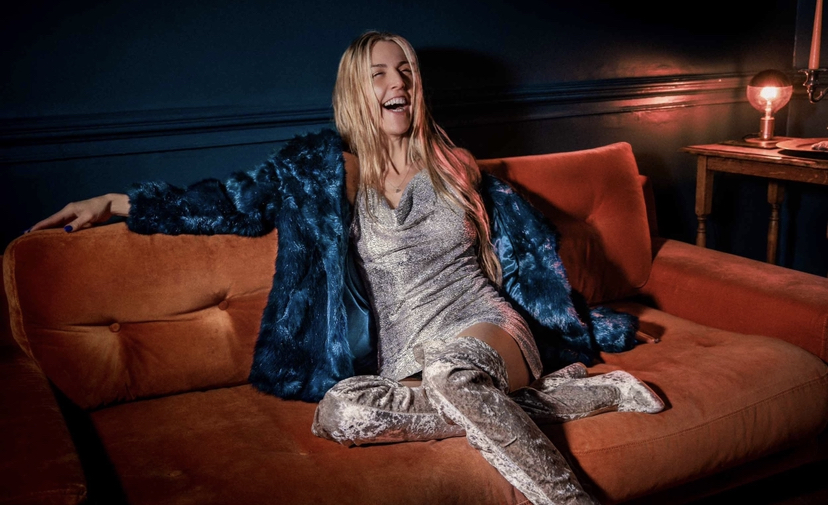
Love, Sexuality and Relationship Coach, Female Leadership Mentor.
Chloe De Sousa is not your average love, sex, and relationship coach; she's a luminary with over two decades of experience in guiding individuals through the depths of intimacy and self-discovery. As a seasoned 5 rhythms dance teacher and a dance movement psychotherapist, she's not just about theory; she's all about embodiment and transformation.
With a passion for unlocking the boundless potential within each person, Chloe empowers her clients to embrace their ecstatic sexuality and step into their own unique leadership journey. Her approach is rooted in trauma-informed practices, blending the latest findings in modern science with the timeless wisdom of ancient tantra.
Known as a "legend of space holding" and hailed as the "queen" of 5 rhythms dance facilitation, Chloe's reputation precedes her. Her influence extends globally, offering 1-1 coaching, transformative courses, and captivating talks that bridge the gap between ancient wisdom and modern understanding.
Beyond her spoken words, Chloe is also a published author, sharing her profound insights with the world. In her eyes, pleasure is not a privilege but a birthright for everyone.
www.feralgrace.net
